Friday, March 20, 2020

NOW IS PRECISELY THE TIME TO DECARBONIZE


Why have we been slow to eliminate fossil fuels? The basic short answer is fear of disruption. (That would be the we the people, not the we the corrupt oligarchs.  That is a separate post).

Well, disruption is here.  COVID-19 has made sure of that.

Now, there’s nothing left to fear in moving things quickly from carbon-intensive to low- and no- carbon.  Our economy is going to be upside down no matter what we do now.

Indeed, currently elected officials on both sides of the aisle are talking about planned economy efforts, normally associated with war, to build respirators, masks, hand sanitizers.  We are hearing of the first toes in the water to universal basic incomes, with $1000 checks to every American.

We cannot talk about decarbonizing "once we have handled this crisis."  No.  We must address COVID-19 in a climate-conscious way NOW.

There are signs that some of our legislators get this.  Here is a letter from eight senators to the majority and minority leaders of the House and Senate urging that dollars given in the stimulus are tied to climate-conscious demands.


THIS IS EXCELLENT and should be applauded.  More, everyone's senators and representatives should be hearing from us right now that (1) We support these 8 senators and their request and (2) We do not want people flying now because people need to stop moving around.  The airlines do not need to be propped up.  Instead, we need to pay airline workers and help them move to jobs that support our effort against COVID-19 or to clean energy jobs (railroad anyone?), (3) Cruise ships need to go the way of Fotomat.  At this time with many pressing social needs, cruise ships fill none of them.

Image may contain: text    Image may contain: 3 people, text

Please read the senators' letter.  Please applaud these first steps.  Then please call to let them and your legislators know that there is political will for action.


We failed to listen to the scientists to get ahead of the COVID-19 curve.  We still have one last chance to flatten the climate curve by halving emissions by 2030.  That starts right now, not in 18 months.

Image may contain: 1 person, text


Saturday, April 13, 2019

A Climate Policy Allegory: We Must Educate Ourselves, Our Choices Are Going to Matter

Here in NY State, we are on the verge of passing the Climate & Community Protection Act (CCPA).  It is a bill that was promoted by a coalition group, NY Renews, including unions, environmental groups and justice groups.  The CCPA’s goals are to reach 50% of electricity from renewable sources by 2030 and 100% emissions cuts by 2050.

NY Renews has a companion carbon tax called the Climate & Community Investment Act (CCIA).  Presumably, after the CCPA passes, NY Renews will turn its focus to passage of the CCIA.  This carbon tax would start at $35/ton.  The funds collected would be used as follows: 30% Climate Jobs & Infrastructure, 33% Community Just Transition Fund, 7% Worker and Community Assurance Fund and 30% New Yorker Energy Rebate Fund.

This carbon tax would be promoted as centering on justice concerns.

There is another carbon tax proposal that has been introduced into the NY legislature.  This carbon tax would take 60% of the collected monies and return them to the 60% poorest citizens of the state.  The other 40% of the collected monies would be invested in driving  the growth of a clean energy economy.  This bill, known as the “Parker/Cahill Bill,” for its sponsors in the Senate and the Assembly, is essentially revenue neutral for the poor and middle class, who would get a carbon dividend. 

This carbon tax would help the poor, regardless of their identification with any particular group, be it a union, or a group that has suffered discrimination in our nation through our history.

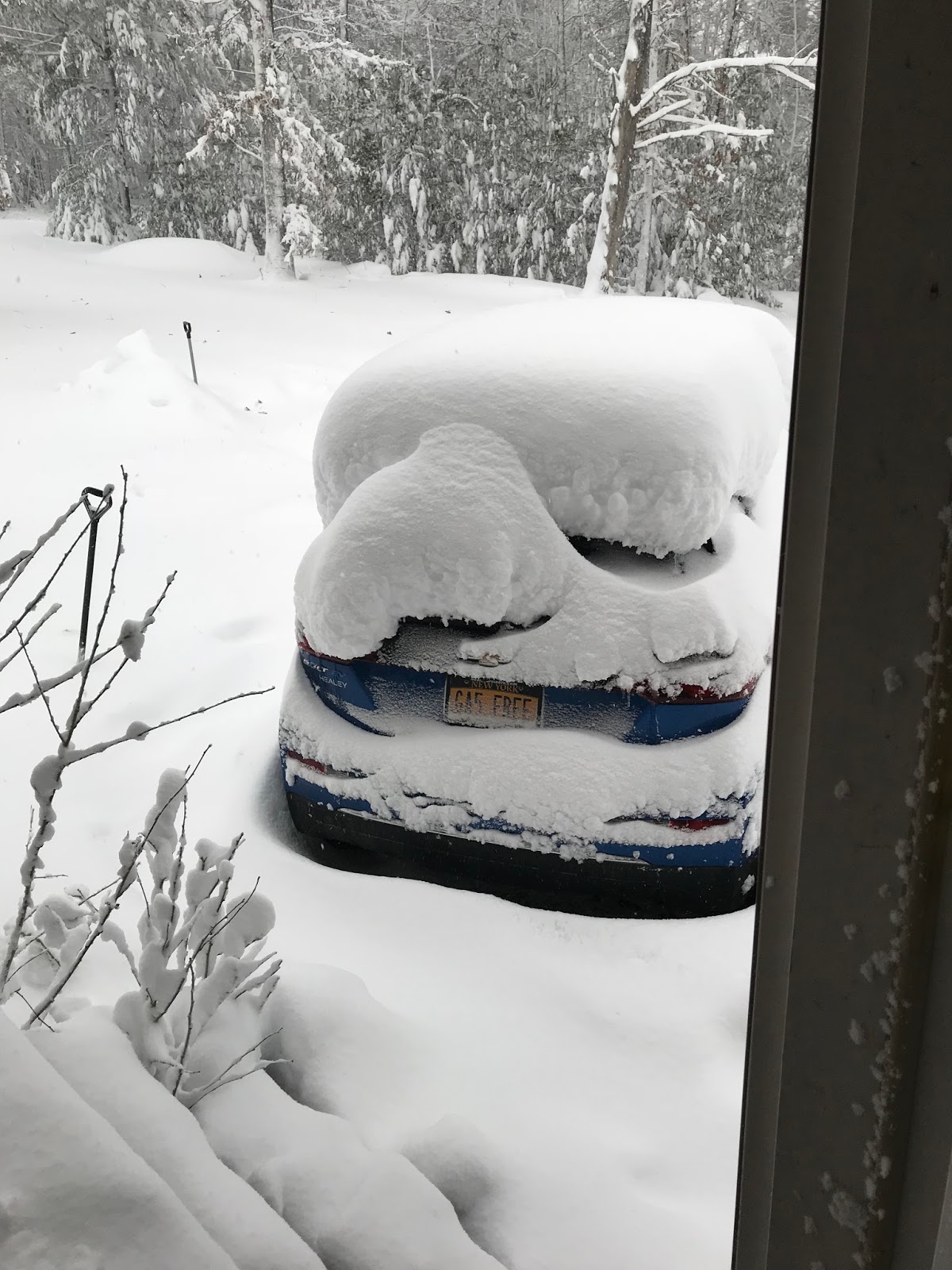
I am sitting here in a voting precinct that voted for Trump, an almost universally white precinct, that has never recovered from the 2006 crash.  This district is rural, poor and white.  People are struggling to stay employed and to pay their property taxes.  My neighbors must drive long distances to work, and generally do so in trucks and SUVs, to get through snow that cannot be permitted to stop them from getting to work.  Most homes are heated with oil.

Which carbon tax is implemented here in NY has huge implications for my neighbors.

If the Parker/Cahill Bill is implemented, they will get back a dividend that surpasses their increased energy costs.  If the CCIA is implemented, they will not. 

If the CCIA is implemented, union workers and historically disadvantaged groups will benefit.  If the Parker/Cahill Bill is implemented, these groups will get an equal dividend as anyone else, so long as they are among the poorest 60%.

We are on the cusp of implementing meaningful climate policy.  We have to be, or we will suffer immensely.  How we do it matters.  To real people.  And to whether we can do it in a way that endures. 

My neighbors will rightly reject solutions if those solutions leave them out. 

Finally, no one should delude themselves that this story is peculiar to NY.  Revenue neutrality is about justice.  This is true in NY, in MA, in WA and, yes, in Washington, DC. 

It is one of the reasons I so strongly support the Energy Innovation and Carbon Dividend Act.  Fairness matters.

Saturday, February 16, 2019

"Bring it on."

There have been many legitimate criticisms of the Green New Deal (GND).  It is non-binding and it lacks policy detail.  More, it is clearly unrealistic.  It envisions decarbonizing 100% in under a decade.  That's not only electricity.  It includes retrofitting every home in America within ten years, replacing every automobile within ten years, eliminating jetliners within ten years...

However, I think we must recognize the powerful rallying point the GND is serving.  People are angry at the growing wealth disparity fueled by fossil fuel oligarchs who KNOW they are stealing our livable climate to fuel their greed.

As someone that has lived, eaten and breathed climate and worked directly for bipartisan solutions for years, I agree with these assessments of the scope of the infrastructure challenge. We cannot possibly decarbonize in a decade, especially if we close nuclear plants.

Not only are the infrastructure goals unrealistic, the GND is also politically unrealistic. If we are to have an enduring solution, we must have most of the nation on board. Australia is a cautionary tale. They got a carbon tax only to flip the government immediately afterward and it was revoked. Think of the ongoing saga of the ACA here.

It's been over 30 years.
If we are going to address climate, technological limitations and political limitations demand much more than a non-binding, undefined resolution.

In that context, I offer this. We have tried to do this without screaming bloody murder. We have remained rational...ever since 1988 when James Hansen testified in Congress and earlier.

Nancy Pelosi is ROCKING IT.
Those who are passionate but not clear-eyed must rally.  We need them to rally. Thank goodness we have Nancy Pelosi, who is giving them room to explode on the scene, while creating room for “sensible” alternatives to emerge from the climate change hearings.

I am partial to Senator Sheldon Whitehouse’s response to Mitch McConnell’s forcing of a Senate vote on the GND.  Whitehouse is a fiscal conservative climate hawk who has placed carbon pricing solutions at the top of the list. He has been offering to talk with GOPs on climate for years. When McConnell announced he was bringing the GND to the floor to vote "no" on it, Whitehouse responded with a cynical laugh and said “this is what you have to offer after having nothing for years? I can hardly wait for this discussion.  Bring it on.  Please.”  (Paraphrased).
Senator Sheldon Whitehouse

Here’s a moderate, business-minded climate hawk Senator who will use this vote as a chance to slam the GOP for failing to offer anything of substance.  For failing to offer anything of substance for DECADES.

Here is his 10 minute response, one of his regular weekly talks on the Senate floor dedicated to climate.


For me, the bottom line is this.  We must rally.  But we also must ensure that we do not let the GND be a litmus test.  Let us allow for folks to say “I support the goals of the GND, so let’s sit down and hammer out policies to actually move toward those goals.”

And let us also use the political moment to demand everyone offer something better.

It is time for the conversation.  Bring it on.  Please.

Tuesday, February 12, 2019

Carbon Pricing 2019-The Nuts and Bolts

Carbon Pricing
There are several different forms of carbon pricing.  Each is designed to create a disincentive to use products that emit carbon dioxide into the atmosphere.

The two main ways they vary is as to (1) how the price is assessed (tax versus cap & trade), and (2) what is done with the money after it is collected (returned to all citizens/revenue-neutral versus retained and used for various means/revenue positive).

Here is a very basic review of these varied mechanisms.

I. The Energy Innovation and Carbon Dividend Act 2019 (H.R. 763).  (EICDA) This is a fee collected on all carbon-emitting products that enter the economy at point of well, mine or port. It is revenue neutral; all fees collected are returned to all citizens and legal permanent residents in equal amounts, monthly.  Because none of the money collected is retained by the government, it is said to be “revenue neutral.”  Studies project that the bottom 2/3 of earners, who have smaller homes, fewer boats, RVs, and other luxury items, receive back more in the dividend than they pay out in the fee.  The top 1/3 of emitters pay out more in the fee than they receive back in the dividend.  Emissions are projected to drop 40% by 2030 solely due to the EICDA and 90% by 2050.  Projections also show that 2.1 million jobs will be added in 10 years.  The economy will grow as a direct result of the EICDA.

There is a “regulatory  pause” on federal regulations designed specifically to target carbon emissions.  This pause is immediately ended if the nation is not meeting emissions cuts targets.  This pause does not affect any regulation other than federal regulations designed purely to cut carbon emissions.  Auto emissions standards are untouched.  Methane leakage regulations are untouched. This regulatory pause impacts one existing regulation:  the now defunct Clean Power Plan.  It does not impact state, local or regional regulations.

There is no provision reducing fossil fuel company liability.  Fossil fuel companies remain wholly subject to tort law.

-The average family of four receives $47/mo in the first year, $288/mo after 10 years, and $396/mo after 20 years.
-Gas prices go up 15 cents/gallon in the first year, and 10 cents/gallon each year thereafter
-The price on carbon will reduce direct fossil fuel use and also derivatives like plastics

(Note:  This bill also includes a “border adjustment” which places the fee on any imported products only if the product comes from a country without a comparable price on carbon.  This creates an incentive to importing countries to implement a price on carbon rather than pay into US coffers).

II. The Climate Leadership Council Proposal. This is a revenue neutral carbon fee and dividend as well.  It begins at $40/ton and rises steadily, but more slowly than the EICDA.  It would end fossil fuel regulations outright and prevent tort liability for the fossil fuel companies.

III. Cap and Trade.  The Waxman-Markey Bill of 2009.  The government sets limits on how much carbon can be emitted and auctions off the rights to emit that carbon.  The limits gradually decline annually.  Previous challenges with this mechanism included the right to increase emissions if they were offset (a carbon reduction plan was instituted).  Corporations were buying and selling carbon rights and emissions were not limited because offsets took the place of the emissions cuts that were supposed to happen.  Money collected can be retained to raise revenue or returned, varying from plan to plan.  Waxman-Markey retained the revenue.

 IV. The Tax Swap Proposals.  Favored by many conservatives, this bill places a fee on all carbon emitting products and is revenue neutral just like the EICDA.  However, money is not returned equally to all citizens.  Money collected is returned by reducing income taxes in amounts equal to the fee collected.  People who do not pay income taxes receive nothing back.  People who pay little in tax see little in returned money.  The wealthiest, with the greatest taxes, receive the most back.

BC uses a tax swap along with a tax credit for the poorest citizens. It started at $9/tonne in 2008 and up $5 each year. It cut fuel usage 16% while surrounding Canada went up 3%.

V. Congressman VanHollen Bill 2014 (Healthy Climate and Family Security Act of 2014).  Rep. VanHollen has introduced a cap and trade bill that sets limits on emissions and auctions off the rights to those emissions. This bill closes the offset loop holes.  In addition, it adds a dividend.  Like the EICDA, 100% of the proceeds of the auctions are returned to each person.  The advantage of this bill over the EICDA is that it sets carbon limits according to the scientific projections of what is required to remain under 2 degrees celsius change.  The drawback is a more costly and complicated mechanism of implementation.  Moreover, the EICDA has a mechanism to adjust the tax to ensure targets are met.

VI. Revenue Raising Approaches.  The Boxer-Sanders bill started at $20/ton and rose to $33/ton after ten years.  It rebated 60% to citizens, retaining 40% for subsidies and deficit reduction.

VII. John Delaney’s Tax Pollution, Not Profits Act 2017.  This was a carbon tax swap-dividend hybrid.  It was not 100% revenue neutral.  It retained a portion of the money to retrain or fund retirement of coal workers.  Those at or near the poverty level receive a rebate, with those at the poorer end receiving more.  The primary return of the funds was in reducing the corporate tax rate from 35% to 28%.  This bill was heralded by EAI, conservative think tank and Bob Inglis, as a very significant development in that a Democrat was putting corporate tax cuts on the table, making this a big step forward in seeking a bipartisan solutions to carbon emissions.  (Schatz/Whitehouse's American Opportunity Carbon Fee Act was introduced shortly thereafter and is very similar to Delaney's Tax Pollution, Not Profits Act, differing in allotments of rebates and tax cuts and rates of increasing taxation.)

As of September 1, 2018:

Due to limited formatting options, this blog did not support a more readable table, which you can find at this link.


Friday, October 26, 2018

Keep Talking about Climate Change

Conversations can be powerful.  Have them.

Today, a co-worker told me his next car would be another muscle car.  He knows I work on climate.  He knows I drive an EV.  He knows I advocate for EVs and a carbon tax.  He knows that the climate is changing.  He knows that humans are the cause. He is a liberal that donates to public radio.  He cares about our world.

I have always worked hard to remain patient in my communications on climate.  Alienating people, shaming people, dismissing people's concerns?  That will generally shut down communication.  That is definitely not what I want to accomplish. So I take it step by step.

But today, this coworker, let's call him Peter, crossed a line. I just couldn't understand why he was taunting me...for that is what it was... a taunt, daring me to respond forcefully.  Maybe Peter was looking for me to set limits?  Maybe he wanted to argue?  I didn't know.

I first suggested once again that he test drive my EV.  I reminded him of the instant torque.  But then, when he dismissed my offer yet again, I found myself reminding him of the IPCC report..."we have just 12 years to cut emissions in half."  "Yes, I know.  We are fucked," he said.  "No," I said. "We are not fucked. THAT is a cop out."  


Then he did it.  He had the temerity to raise George Carlin.  "Really?" I thought, "Really, George Carlin?"  He didn't get the chance to finish Carlin's quote.  I pounced, "I hate that George Carlin tripe." He persisted, "wait, no, he's right, the Earth will be fine." 

"Of course, Earth will be fine," I returned.  "Of course it will. THIS IS NOT ABOUT THE EARTH. THIS IS ABOUT SUFFERING.  EVERY SINGLE CARBON ATOM LEFT UNDER GROUND MEANS A LITTLE BIT LESS SUFFERING."

He stopped.  Looked up.  "You are very kind, aren't you?"

Everyone around us was now politely walking away.  Have I severed any important working relationships?  Will I now be dismissed as a nutter tree hugger?  Irony that...tree hugger.  That is precisely NOT what I've just made the case for, I think.

Work rolls on and we go our separate ways. And then I receive this email from Peter:  

"Regarding our conversation about global warming this morning: 
As I reflect on it, I more fully understand your point.  There will indeed be MUCH human suffering and massive loss of life.  I, the misanthrope, focus on the entire planet and [insert misanthropic rant here].  I still perceive all of that the same way, but you shone a light on a consequence of global warming that I was just plain not looking at.  ('How many times can a man turn his head and pretend that he just doesn't see?') 
So, thank you.  Now I have something important to speak about with my sons. 
Have a good weekend, 
Peter" 

What an incredibly kind message.  It left me with gratitude to him and to my own failure to rein in my anger.  It reminded me persistence matters.  Showing up.  We all have to keep showing up.

My reply:
"Dear Peter, 
Thank you so much for this email. After our conversation, my own reflection left me angry at myself because I was so forceful. I try not to foist my perspective on others. But sometimes I get frustrated with the pace of things. Today was one of those days. Your email means a lot to me because it is a reminder that I cannot squelch my passion in my work and communication on climate. 

As to your so-called misanthropic perspective, it is wholly understandable. It reminds me of a conversation I had with my very wise daughter when she was about ten. She asked me if things like cockroaches would survive climate change. I said that I believed so. Her response was 'Good. Then at least we get to start over.'  I think that her view was and is life-affirming. We are cousins to all life and their journey is our journey. You are not being misanthropic—just holistic in view. 

But at the end of recognizing the limits of our powers to destroy, we must also recognize the extent of our power to destroy. Our lives here are a journey and the journey matters just as much as the end result on the day the sun engulfs our planet. It is our obligation to ourselves and all of our cousin-life to journey well. 

Thank you, Peter, for letting me know that our conversation had value for you. It did for me too, especially because of your very kind email. 

Have a good weekend, Claire"

Please, keep showing up.  And, dear reader, have a good weekend.

Thursday, August 9, 2018

Resiliency in the Face of Devastating Diagnoses

Related imageAnyone paying attention to climate change carries fear of the horrible suffering we have already locked in. A sense of hopelessness that often falls away to doomerism.

Doing the hard work of decarbonizing our economy seems to fail to grasp the enormity of the suffering and pain of drought, hunger, migration and loss.  How can we take these mundane steps when the world is on fire?!?!?

But when you are given horrible news, after you cry, you have to pick yourself up and do what has to be done, even the mundane.

One of the challenges is that the damage we have locked in is enormous, even by conservative projections.  Physically unavoidable harm already certain to come, already here. 

This is a huge blow to anyone first looking at climate change.  Before learning about the West Antarctic Ice Sheet and Greenland melt or the concerns about methane pockets in the Arctic, they think, "well, this is a giant problem, but it is purely technological and we can fix it.  I will find out how."

Then they start to dig and they find out that it isn't that simple.  Huge changes are already bought and paid for.  Nonrefundable.

So the thing they first sought out to save is no longer savable.  AND that is when they throw up their hands and say "it's too late."  Understandable... IT IS TOO LATE TO SAVE SO MUCH.

But anyone that has been diagnosed with cancer will tell you, that is when you cry.  Like hell.  Cry, cry, cry.  THEN, you make an appointment for your treatment and you work to extend your chances of being alive in five years from 50% to 60%.  Or hope that it will turn out they've got good margins on the tumor and you actually are looking at your ten year survival chances, not five year.  And sometimes you cry again.  Often times.  Because we have a lot to grieve.  

Grieving is an important part of resilience.  But it is resilience that we need now.  The ability to incorporate our horrible news without becoming dysfunctional.  Without losing functioning.  Still being able to act.  We must get up and do the mundane and we must do it with strength and power and humor and the whole of our human spirit.


But how?  That is no easy task.  So I looked to the American Psychological Association's words of wisdom on resiliency.  What they have to share is quite useful.  I guess it turns out they know something about human psychology. 

They have ten tips to building resilience.  I’ve quoted their steps and interspersed their application to climate within each numbered section:

(1)  Make connections. Good relationships with close family members, friends or others are important. Accepting help and support from those who care about you and will listen to you strengthens resilience. Some people find that being active in civic groups, faith-based organizations, or other local groups provides social support and can help with reclaiming hope. Assisting others in their time of need also can benefit the helper.  

I joined Citizens Climate Lobby (CCL) and I find it hugely helpful to work with others for a meaningful solution, the revenue neutral carbon fee and dividend.  I know that my own actions are amplified by the actions of 100,000 others.  And vice versa.  Actually, hugely helpful is an understatement.  Highly empowering.  I have learned a lot from the group.  But CCL isn't for everyone.  There are many other organizations out there working for climate solutions.  If working with a group sounds appealing, find one that is comfortable for you.

(2) Avoid seeing crises as insurmountable problems. You can't change the fact that highly stressful events happen, but you can change how you interpret and respond to these events. Try looking beyond the present to how future circumstances may be a little better. Note any subtle ways in which you might already feel somewhat better as you deal with difficult situations.

In climate, this is a major stumbling block.  For me, I hold onto the reality that the scientists just are not 100% sure of anything.  There remains great uncertainty about how bad the positive feedbacks will be, how resilient ecosystems will be, whether we can develop means of removing carbon dioxide within the next few decades.  We can see those uncertainties as death sentences or as avenues for working things to our benefit.

(3)  Accept that change is a part of living. Certain goals may no longer be attainable as a result of adverse situations. Accepting circumstances that cannot be changed can help you focus on circumstances that you can alter.

This is HUGE.  We cannot avoid warming the planet.  We already have, about 1C.  And we are seeing fires and droughts and floods and extreme storms, refugee crises, rising sea levels, increases in vector borne diseases.  And we have locked in much worse, that we cannot change.  But there is a difference between seeing the collapse of the West Antarctic Ice Sheet in 50 years versus 300 years.  Our ability to adapt and mitigate suffering is vastly different in 4C warming versus 2C warming, whether we are looking at sea level rise, crop yields, storm damage, diseases, or any of the impacts of climate change.

(4) Move toward your goals. Develop some realistic goals. Do something regularly — even if it seems like a small accomplishment — that enables you to move toward your goals. Instead of focusing on tasks that seem unachievable, ask yourself, "What's one thing I know I can accomplish today that helps me move in the direction I want to go?"

Some days, this is as small as recycling your shampoo bottle.  Other days, it is teaching someone else the value of recycling their shampoo bottle.  And some days, it is seeing your Republican Congressman sponsor a resolution to act on climate.  And on really great days, you see hundreds of thousands march in New York City, or see the Pope release his encyclical, or hear that nearly 200 nations actually agreed on something. 

(5) Take decisive actions. Act on adverse situations as much as you can. Take decisive actions, rather than detaching completely from problems and stresses and wishing they would just go away.

'Nough said.

(6)  Look for opportunities for self-discovery. People often learn something about themselves and may find that they have grown in some respect as a result of their struggle with loss. Many people who have experienced tragedies and hardship have reported better relationships, greater sense of strength even while feeling vulnerable, increased sense of self-worth, a more developed spirituality and heightened appreciation for life.   AND (7) Nurture a positive view of yourself. Developing confidence in your ability to solve problems and trusting your instincts helps build resilience.

Climate activism offers benefits like connecting with others who share your concerns.  You can learn new skills, like writing letters to the editor, making difficult phone calls, or presenting to a local town board.  For me, personally, I am learning to find my own voice through climate action.  And, as it turns out, I won the lottery of climate action perks. I fell in love with a fellow climate activist.  :)

(7)  Keep things in perspective. Even when facing very painful events, try to consider the stressful situation in a broader context and keep a long-term perspective. Avoid blowing the event out of proportion.

Well, I don't think we are in danger of committing this one.  Climate is a really big deal, and it is almost impossible to overstate its impact.  My daughter may have achieved this one a few years ago.  She asked me if creatures like cockroaches and bacteria would survive climate change.  And I said, that, yes, I thought so.  Her response may be resiliency incarnate:  "Well, good, then if we fail, we get to start over."

(8) Maintain a hopeful outlook. An optimistic outlook enables you to expect that good things will happen in your life. Try visualizing what you want, rather than worrying about what you fear.

Those uncertainties?  See the path to success.  It is like playing miniature golf.  You have to see where you want the ball to go if you have a hope of getting it there.  On the days we can't do this, take a walk.  There is no reason to make seeing failure a habit.

(9) Take care of yourself. Pay attention to your own needs and feelings. Engage in activities that you enjoy and find relaxing. Exercise regularly. Taking care of yourself helps to keep your mind and body primed to deal with situations that require resilience.

Know what keeps you feeling strong.  The climate movement sure could use more parties, more shared dinners, more music festivals, more time celebrating successes, no matter how small.

(10) Additional ways of strengthening resilience may be helpful. For example, some people write about their deepest thoughts and feelings related to trauma or other stressful events in their life. Meditation and spiritual practices help some people build connections and restore hope.

The key is to identify ways that are likely to work well for you as part of your own personal strategy for fostering resilience.  Me?  I am writing this blog. :)

It is clear that the past 50 years of warnings on climate have not led to resilient behavior.  We have shut down, denied, ignored or succumbed to the doom of the horror.  Practicing resiliency within the context of climate action may be an essential way to move beyond that.

Saturday, March 10, 2018

Why am I a climate activist? Because I love modern convenience and energy.

“U.S. Energy Secretary Rick Perry...blast[ed] the 2015 agreement to limit global warming. Perry said it was ‘immoral’ to say people should live without fossil fuels.”

Not quite.  It is immoral to deny people access to energy.  To modern medicine. To transport to their work. To jobs. To food. To water. 

I worry about my children's futures.  Will they have a warm home, with food, with light and heat?  Will they have jobs that give them fulfillment while putting food on the table?  Will they enjoy the traditions we share, like coffee and chocolate, with their children?  Will they have security, free of war and strife?

To do all of that, they need access to reliable energy.  And they need people across the globe to access reliable energy.

This past week, the kids and I experienced a week without energy.  Storm Riley cut us off from the grid.  No power, no heat, no WiFi, no lights, no computers, no running water.


We were lucky.  We have resources in a nation full of resources.  The roads were cleared by snow plows, our neighbors helped us clear our driveway, we made our way to the local gym for showers, and the local town for food.  We slept together in a warm bed, made warmer with our loving pets.  We melted snow with our gas stove and had water and food.

Everything I want for my kids, I can provide.  Here, in a nation dependent on fossil fuels.

But those very fossil fuels are driving that which we fear the most...the loss of the security and stability of the energy we currently enjoy.  We had no power.  We had no water.  We had no heat.  Because of extreme weather.  (The local measurements clocked wind speed at 109 mph amidst a snow storm made worse by a melting Arctic).  Our entire town closed down.  No school, no grocery store, no gas station.  We ground to a halt.  

Climate change denied us our energy.  

Image result for puerto rico hurricane maria
Utility Poles Destroyed by Hurricane Maria
We have already burned enough fossil fuels to make our week without energy much more likely.  Weeks without energy are going to get even more likely for us all as we burn even more fossil fuels.  And we are not alone.  People world round have been denied access to energy because of escalating climate impacts and our energy vulnerability increases.   Look no further than poor Puerto Rico, still struggling to get basic energy six months after Hurricane Maria.

Immoral?  Immoral is pretending that action on climate will deny people access to reliable energy.  Immoral is pretending that fossil fuels don't endanger access to reliable energy.

Misguided folks on left and right continue to frame the climate debate as "environment versus economy" or "climate action versus energy."  Nothing can be further from the truth.  Climate action is about ensuring energy reliability.  Climate action is about ensuring that we continue to have heat, water, food, security while transitioning our energy infrastructure from fossil fuels to carbon free sources.

As a climate activist, I have ZERO interest in halting all fossil fuels tomorrow.  They are what kept my children safe and warm this past week.  To do otherwise would be immoral.

As a climate activist, I know that we need to transition from fossil fuels to the energy sources that will not harm our children.  We need to do that in a predictable, sustainable way that ensures we all continue to have heat, lights, food, water, jobs and security, before climate change robs us of all that we have built for our children with all of our energy.

There are many ways we can transition from fossil fuels to carbon free energy and we can debate the best ways.  But it is immoral to insist that fossil fuels are necessary to modern convenience.  It is quite the opposite.

Rick Perry's words signal that the upcoming elections will likely reinstitute the old "Energy Voters" messaging that worked so successfully in the past.  It is high time that we make it plain that WE are the energy voters.  Demanding carbon free energy is the demand for access to reliable energy.  And it is the only moral stance.


Friday, March 2, 2018

What Does the Russian Attack Really Look Like? A Word from None Other Than the Enemy.

It isn't often that I will cite a report authored by the GOP members of the committee headed up by Lamar Smith.  But this blog post is entirely based on its report "United States House of Representatives Committee on Science, Space, and Technology, Majority Staff Report:  Russian Attempts to Influence U.S. Domestic Energy Markets by Exploiting Social Media."
Their conclusions, while couched in a heavily pro-fossil fuels language, are basically sound. The Russian attacks on our democracy included a great deal of manipulation of our national discourse on energy.  Putin has a lot to gain from both injecting vitriol into our discourse, generally, and into manipulating our energy decisions, in particular.

I quote their more salient conclusions here.  Please read them.  And then take a long hard look at the ads that Russians posted to inflame our discourse on energy. They have everything to gain from us believing that other Americans are "idiots," or worse.  These ads consistently make us FEEL others are wrong, and we have to FIGHT.  None of these ads explore the difficult challenges of policy, compromise, transition.  They each push for extremism and visceral, gut reactions.  Indeed, there were one or two ads here that I didn't want to include in this post because I agree with them...and I don't want them maligned as Russian and I don't want to admit that I am susceptible to manipulation, too.  

It is clear, we ALL have some soul-searching to do if we want a nation of laws and a democracy that represents our interests, not those of a petroligarch in Moscow.

"By posting content that supports positions held by both liberals and conservatives alike, the Russians used social media to instigate and inflame discord in the United States. Russian social media manipulators intentionally injected foreign propaganda into American political discourse. These Russian agents are only interested in creating discord in America while hiding behind an anonymous and misleading social media pseudonym, as demonstrated by the highly divisive, often contradictory posts provided in this report.
...
Based upon the findings detailed above, it is clear that Russian agents are using social media to influence and impact U.S. energy markets. Regardless of one’s political or ideological views surrounding U.S. energy policy and climate change, the American people deserve to be free from foreign political interference. As such, the Committee will continue to work with social media companies, which have taken positive steps to bring transparency to the online debate. Americans have a right to know that much of what they view online is being disseminated by foreign agents in an effort to disrupt U.S. energy policies. The goal of these foreign agents is to shape Americans’ perceptions of energy and of climate change issues."


At this moment in time, it is clear that the people we have elected to office are there because they represent Russian interests.  We need to remove them.  The question is...will we do it by falling prey to the same attacks, or will we do it in the best interests of our nation?

It comes to us.  Will we do the hard work of listening to others, digging through compromises, and supporting real policy that will address reality?

I leave you with one very reasonable answer to this question:  Fights Worth Having, Brett Stephens.  Please take some time to formulate your own.  Our nation's welfare depends upon it.

And I leave you with this perspective from Retrospective.

There's something happening here
But what it is ain't exactly clear
There's a man with a gun over there
Telling me I got to beware

I think it's time we stop
Children, what's that sound?
Everybody look - what's going down?

There's battle lines being drawn
Nobody's right if everybody's wrong
Young people speaking' their minds
Getting so much resistance from behind

It's time we stop
Hey, what's that sound?
Everybody look - what's going down?

What a field day for the heat
A thousand people in the street
Singing songs and carrying signs
Mostly saying, "hooray for our side"

It's time we stop
Hey, what's that sound?
Everybody look - what's going down?

Paranoia strikes deep
Into your life it will creep
It starts when you're always afraid
Step out of line, the men come and take you away

We better stop
Hey, what's that sound?
Everybody look - what's going down?

We better stop
Hey, what's that sound?
Everybody look - what's going down?

We better stop
Now, what's that sound?
Everybody look - what's going down?

We better stop
Children, what's that sound?
Everybody look - what's going down?


Sunday, February 25, 2018

Tipping Points and the Leaking Roof: There is No Better Time to Act than Now.

Sept. 3: 17th Street Canal breach
Levee Breach in New Orleans during Hurricane Katrina 2005

Tipping points are an important concept in climate change. There are thresholds of warming that, once passed, create changes that are not readily undone. Some of these cannot be undone in years, some in decades and some in centuries or millennia.

One type of shorter term tipping point is inherent in the limitations of our infrastructure. We have constructed our roads, bridges and buildings to withstand a certain range of conditions. When we cross the upper threshold of what they can withstand, suddenly, we experience destruction. The levees overcome during Hurricane Katrina is an example of infrastructure overwhelmed and then resulting floodwaters doing devastating damage all at once. We are crossing infrastructure tipping points left and right.

Arctic Sea Ice Minimum Ties Second Lowest on Record
Arctic Ice Melt 2017, NASA
Longer term tipping points are more scary and their threshold points are less easily identified. An example of this is that as we warm the Arctic, we may warm it enough to release huge amounts of methane that will quickly speed warming (this tipping point is also a positive feedback-warming reinforcing more warming). Exactly how much warming will put us past that point is not certain.
Complicate all of this with the fact that warming is delayed. We are experiencing the warming locked in decades ago, now. What we are doing now is committing us to warming in the future. Knowing just how much carbon emissions we can withstand is a bit like shooting a target blindfolded and dizzy.
There are many tipping points. We’ve passed some and others are in front of us.
As each day passes, we face a steeper and steeper climb.
It’s like a leaky roof. If you replace the roof before it starts to wear badly, it’s best.
If you wait until there are peeling tiles and moss growing, you may have to replace some of the sheeting.
If you wait until water starts to seep in, you have damage to the ceiling Sheetrock to repair.
If you wait until the water is flowing, you will have a lot more to repair.
It’s a long time until the house becomes condemned.
Unfortunately, the term, “tipping point,” while useful, can be fear-inducing without commensurate action-engaging. 

We cannot worry about "passing the tipping points" so much as fixing the leaking roof.  The sooner the better.

Wednesday, February 7, 2018

The Power of Incrementalism, Revisited, Yet Again; EV Batteries, Government Budgets and Agencies with Horrible Names

Today, for the first time in what seems a lifetime, the Democrats and the Republicans in the Senate agreed to something.  They agreed on something big...the federal budget.  As I scanned the news headlines, there was a lot of talk of important concerns.  The GOP, it turns out, doesn't really mind ridiculously large deficits, the GOP may not really need to placate Trump all the time, and the Democrats are not all necessarily on the same page as Pelosi threatens to send the budget off the rails in an effort to protect Dreamers and DACA.

Unfortunately, I noticed one thing seriously missing in all the budget news.  Just what does this mean for climate change?  The topic seems forgotten in the media coverage. Is it forgotten in the budget?

Now, I haven't seen an analysis of the bill yet, as it relates to climate.  But I did read portions of the bill and I would like to share with you here why the bill is important, why what legislators do is important, why insistence by the Dems that they get funding for more than just defense is important.

I raise to you a little known office within the Department of Energy.  Those that have followed my blog will recognize the office as one of my favorites:  ARPA-E (The Advanced Research Projects Agency-Energy--could anyone have dreamed up a less catchy title?).

BEEST: Just one of ARPA-E's projects,
BEEST funds research into EV energy storage
ARPA-E funds research projects into energy storage, transmission, efficiency.  They are making possible the research into battery improvements that will make electric vehicles more economically and practically viable, into grid efficiency in transport of electricity, into distributed energy production (think solar), into storage on microgrids, and so much more.
So much of what we need in order to remove carbon from our electricity production and electrify everything using this carbon-free grid depends on the kind of research ARPA-E makes possible.


You are probably wondering what any of this has to do with the budget.  Democrats pushed for more non-defense spending.  Why does that matter?  ARPA-E is just one small example of what that funding means.  In this bill, ARPA-E receives the same funding it received last year, which is the largest amount it's ever received after its initial inception.

ARPA-E's historical funding levels


Today's ARPA-E Funding in the Senate Budget Bill
If and when the budget passes the House, ARPA-E is going to continue to fund important research into clean energy innovation because the Democrats pushed to fund our government.  Not just our military, but the rest of our government.  There are a lot of good things that our government does, even if everyone wants to talk about how much government sucks.

The moral of this story?  Don't think that just because the Dems and Reps agreed on something that their battles don't matter, are more of the same old, same old or that there isn't a lot riding on the outcomes of these battles.  

Boring old bipartisan agreement to hard won budget battles may mean all the difference in carbon kept underground.

Thursday, January 4, 2018

The Moral of the Climate Story; A Mother’s Version

I started to focus on climate action in earnest because I became afraid for my children. What world would they face if we don’t act?  I’ve done everything I can for them, facing scary medical issues, up long and repeated nights, working long days, chauffeuring and doing homework. How can I not also act to preserve a livable world for them too?

So I have immersed myself in climate science and policy. I’ve worked to cut my own emissions, methodically and in a way that supports others doing the same. I’ve developed a network of friends and allies that are doing the same. We support each other. I keep my kids lightly informed, not wanting to overwhelm them with what I know. All the while, raising them the best I can, as they make plans for lives of their own. 

And I encounter people who lightly and dismissively say it is “too late.”

Too late for what?

Too late to avoid warming?  Of course it is. We’ve already warmed 1C over preindustrial times. 

Too late to avoid 1.5C?  Yup. That’s locked in. 

Too late to avoid 2C?  Perhaps. But no one is sure of that yet. It might still be possible. 

Too late to avoid 2.5C? 3C? 3.5C? 6C?  Well, no. It’s not too late to avoid that. . 

What does “too late” mean?  

It’s easy to feel defeated. Year after year, we talk about climate change. We talk about projected impacts and what we must do to avoid them. And then we see them come to pass anyway. 

It’s daunting. 

But “too late” isn’t meaningful. And it most certainly isn’t action-engaging. 

It is essential that we understand how bad things are. And we prepare to adjust to the coming onslaught of change. 

But we also must recognize that our actions still matter. The pace at which we emit carbon over the next 30 years will impact generations. Faster means much faster and harsher impacts. Slower means more time to adjust, more opportunity to act with compassion with each other and less suffering. 

We must still fight for what we know is right. 

Thankfully, we are seeing avenues for action working.  Market disruptions are seeing the rise of solar and wind, married to battery storage and EVs, public transport and city planning that supports pedestrian and cycling. Coal is dying. Oil and gas are next, with the World Bank just announcing it will no longer invest in oil and gas, just as it did with coal some years ago. 

China is churning out solar panels and pricing carbon. India is looking to be a renewable maven. 

Things are hardly rosy. But we cannot fool ourselves into doom. We must focus on mitigating the damage, reducing suffering and increasing opportunities for compassion.

If we truly care about our children, then we are called upon to do the most difficult task of all. We must operate on the belief that love and compassion matter above all else.  

Even more than fear that it is for naught. 

After all my immersion in climate change, I’ve learned there is no “fixing” climate change. My initial journey to save the world for my kids has led me to a harder place that demands more of me. 

Like with a child with a serious illness, all we can do is hold our child and reassure them “it will be alright.”  And do our damndest to make it as alright as we can. All the while reducing their suffering by loving them. And loving them by reducing their suffering. 

In the end, we mourn what we’ve lost. But we rejoice in what we are blessed to have. 

Walk that difficult path. It’s the right thing to do. 

Saturday, June 10, 2017

Anger on a Dark Morning-Putting it in Terms That People Seem to Get

Roaring Fork Baptist Church
in Gatlinburg, TN After the Fire

Climate change is the extremist that seeks to end our way of life.

Climate change is the trespasser that invades our private property and steals what is ours.

Climate change is the suicide bomber that kills thousands in fire.

Climate change is the vandal that destroys our statues, our cultural landmarks, our loved ones' tombs.

Roaring Fork Baptist Church
in Gatlinburg, TN Before the Fire
Climate change is the biological weapon that decimates by disease.

Climate change is the enemy soldier that bombs our roads and bridges.

Climate change is the aborter that kills unborn babies.

Climate change is the craven murderer that kills innocents.

Climate change is the kidnapper that steals our children.

Climate change is the ungodly that destroys creation.

Climate change is the stranger that steals our jobs and puts us out of work.

Those that know but continue to profit by it are laughing. The evil are destroying our way of life. They think we are weak. And they are laughing.

The great irony is that it's not terribly difficult to defend our way of life. It is simply a matter of committing to the fight.

To the cowards and traitors that refuse: fuck you.

Sunday, May 7, 2017

So-Called Corporatists, the Leftist-Puritans and Getting Sh!t Done

It seems the left is gearing up to eat its own again. The Young Turks are focusing on Andrew Cuomo as corrupt corporatist running for POTUS in 2020.


Yes, in the midst of a GOP mercilessly throwing 24M off of healthcare without so much as a CBO score and a POTUS looking to dig up every spare atom of carbon, and nearly three and a half years in advance of the election, The Young Turks are preparing to bring down one of the likely candidates for the Democratic Party.  Apparently, Cuomo is the great scourge of our time.  Of particular note is his support for charter schools in the past and his less than stellar relationship with teachers’ unions.

I live in Cuomo’s NY. Not only that, I am a public school teacher in Cuomo’s NY.  I have watched in frustration as he has undermined teacher autonomy and input and supported policies that do not empower me as a teacher.  Having lived in Cuomo's NY, and dealt with the frustrations of policies I do not like and political games I've abhorred, I say this:  I would take him in a heartbeat as our nominee and campaign for him.

Corporatist? In the area of carbon emissions alone, that corporatist has overseen the banning of fracking, the push for solar, the implementation of an EV rebate, the goal of cutting emissions 80% by 2050, efficiency programs for appliances, green lending programs, home efficiency and more.

Was he responsible for these? No. The people of NY have built powerful political will and demanded it. When Zephyr Teachout ran against him in the 2014 primary and gave him a run for his money, HE SHIFTED LEFT. His latest move to make college tuition free for families earning under $125,000 would never have happened otherwise. Not only that, he has hobnobbed with the corporations in getting this done. Solar is about big money and the fracking ban was only doable because gas wasn’t as profitable as it once was.

But… Yes, BUT… He DID shift left and he DID bring corporations to the table to make money doing better things rather than worse.

There is a giant chasm between powerful people wielding power within the system and powerful people trampling the system. 

Democrats working for carbon emissions cuts and creating free college tuition?  BRING IT.

The left that booed Elizabeth Warren and Bernie Sanders at the Democratic Convention and voted for Jill Stein in November weakened Elizabeth Warren and Bernie Sanders. Without being able to demonstrate that they bring the left with them, they have less power. Yes. The purity left has helped to strengthen yet another “corporatist” Democrat-Chuck Schumer.


And you know what? BRING HIM ON TOO. Just this past week, his corporate focus helped bring us $15M increased funding to ARPA-E, despite the fact that Trump slated the clean energy research agency for total elimination. What might have driven “corporatist” Schumer? Saving a corporate interest in Long Island called Brookhaven that depends on ARPA-E funding. 3000 home town jobs.  In clean energy technology. BRING IT.

Bring on powerful people wielding power in the right direction.

We must speak up and out. Expertise, knowledge, and power are important. The left must stop shunning power and must stop demanding purity. We have a rapacious GOP to stop and we have Democrats who broker deals, bring diverse interests to the table and will be moved by our political will, if only we demonstrate that we will sit at the negotiation table rather than simply destroy that table.

The Schumers and the Cuomos of the world are not people I want to have over to dinner. But if they go wreak on the rest of the nation the terror of emissions cuts, fracking bans, free college tuition, and jobs in clean energy technology that they have wrought on New Yorkers, I say BRING IT.